In the field of metalworking, forging and casting are two common manufacturing techniques, each with unique characteristics and applications. Although both methods are used to create metal parts, they differ significantly in process, performance, and application areas. Understanding these differences can help in selecting the most appropriate manufacturing technique for a specific application.
Fundamental Differences Between Forging and Casting
Casting
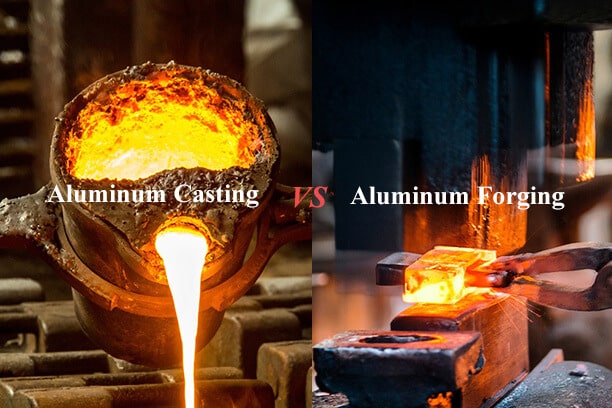
Casting involves pouring molten metal into pre-made molds, where it cools and solidifies into shape. This method is suitable for producing complex shapes and large parts, such as automobile engine blocks and machine tool beds. The primary advantage of casting is its ability to produce complex-shaped parts at a relatively low cost. However, cast parts usually have lower strength and wear resistance, and may contain internal defects like porosity and sand inclusions.
Forging
Forging, on the other hand, involves compressing metal material into the desired shape using high pressure, typically after heating the metal to a specific temperature to facilitate easier shaping. Forging is used to produce parts with high strength and durability, such as crankshafts, gears, and connecting rods. Forged parts offer better mechanical properties and wear resistance because the forging process improves the metal’s grain structure.
Advantages of Forging
High Strength and Durability
The plastic deformation during the forging process enhances the internal structure of the metal, making the grains finer and more uniform, which significantly increases the material’s strength and toughness. Forged parts perform better under heavy loads and extreme conditions.
Enhanced Fatigue Resistance
Due to the continuous metal fiber flow lines in forged parts, they have better fatigue resistance. This is particularly important for applications that require enduring cyclical loads over long periods, such as in the automotive and aerospace industries.
Reduced Material Defects
Since forging involves deforming solid material rather than starting from molten metal, it can reduce internal defects such as pores and inclusions. This makes forged parts more reliable in safety-critical applications.
Better Response to Heat Treatment
Forged metal parts respond well to heat treatments, which can further enhance their hardness and strength, as well as improve their wear resistance and corrosion resistance.
Conclusion
Although casting is cost-effective for producing complex shapes and large parts, forging is undoubtedly the better choice for applications that require extremely high strength, durability, and reliability. The high-performance characteristics of forged parts make them highly popular in the aerospace, automotive, and other high-end engineering fields, especially where safety and performance are primary considerations. Choosing the right manufacturing technology ensures the best performance of products in actual applications.