
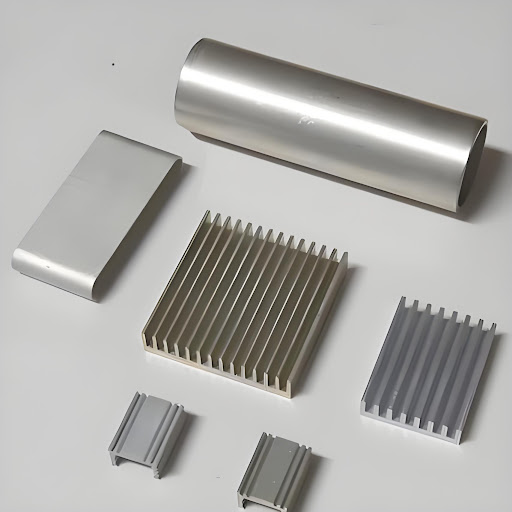
As a lightweight and corrosion-resistant material, aluminum alloy is widely used in aerospace, automotive manufacturing, construction, and hardware industries. However, to further enhance its corrosion resistance, surface treatments are often applied. Passivation and anodizing are two common surface treatment processes. But which one offers better corrosion resistance? This article compares these two processes in terms of principles, features, and corrosion resistance to help you choose the most suitable surface treatment method.
1. What Is Aluminum Alloy Passivation?
Passivation is a chemical process that forms a dense oxide film on the surface of aluminum alloy. This protective film isolates the aluminum substrate from external environmental factors, thereby preventing corrosion.
Characteristics:
- Thin but dense coating:
The passivation film typically ranges from tens of nanometers to a few micrometers in thickness, but it is chemically stable and effectively blocks the penetration of oxygen and moisture. - Simple process:
Passivation is usually achieved by immersing the aluminum alloy in a chemical solution (such as chromate or non-chromate passivation). It is straightforward and low-cost. - Wide applicability:
Passivation is ideal for applications where retaining the metal’s original appearance or maintaining a lightweight coating is important.
2. What Is Aluminum Alloy Anodizing?
Anodizing is an electrochemical process that creates a thick oxide layer on the aluminum alloy surface. This layer not only improves the material’s corrosion resistance but also enhances its hardness and aesthetic appeal.
Characteristics:
- Controllable coating thickness:
Anodized films generally range from 5 to 25 micrometers in thickness, with hard anodizing reaching up to 60–100 micrometers. These films exhibit excellent mechanical strength and wear resistance. - Rich colors:
The porous nature of the anodized film allows for dyeing in various colors, making it suitable for decorative purposes. - High versatility:
Anodizing is widely used in applications requiring high corrosion resistance, wear resistance, and aesthetic appeal, such as architectural facades and electronic casings.
3. Corrosion Resistance Comparison
Corrosion Resistance of Passivation:
- The passivation film relies on its density and chemical stability to block corrosive substances (e.g., oxygen and moisture).
- The thin film provides limited protection in extreme environments, such as high salt spray and high humidity.
- Its strength lies in its simplicity and cost-effectiveness, making it suitable for applications with moderate corrosion resistance requirements.
Corrosion Resistance of Anodizing:
- Anodized films are thicker and offer superior corrosion resistance, especially in acidic or alkaline environments.
- After sealing (e.g., hot water sealing or chemical sealing), the corrosion resistance of anodized films is further enhanced, making them highly effective in harsh environments such as high humidity or salt spray.
- The downside is that the process is more complex and relatively expensive.
4. Which Is Better for Corrosion Resistance?
| Comparison Factors | Passivation | Anodizing |
|---|---|---|
| Film Thickness | Thin (tens of nanometers to a few micrometers) | Thick (5–100 micrometers, adjustable) |
| Corrosion Resistance | Moderate (suitable for mild environments) | Excellent (ideal for harsh environments, such as marine or industrial areas) |
| Wear Resistance | Weak | Outstanding, suitable for mechanical parts |
| Aesthetic Properties | Retains metal’s original color | Can be dyed, highly decorative |
| Process Complexity | Simple, low cost | Complex, higher cost |
| Typical Applications | Mid-level corrosion-resistant components | High-end equipment casings, building materials, automotive parts |
In terms of corrosion resistance, anodizing is superior. Its thicker oxide film not only provides better protection against corrosion but also enhances mechanical strength and wear resistance. Therefore, anodizing is more suitable for high-corrosion environments (e.g., marine or chemical plants) or products requiring long-term use.
However, passivation has its unique advantages, such as simplicity, lower cost, and minimal impact on the original metal appearance. It is ideal for applications with moderate corrosion resistance requirements or where cost sensitivity is a concern.
5. How to Choose?
Choosing between passivation and anodizing depends primarily on the application requirements:
Choose Passivation When:
- Budget is limited, and the corrosion resistance requirement is not very high.
- The original appearance of the aluminum alloy needs to be retained, or a lightweight coating is preferred.
- The application environment is neutral or low-corrosion.
Choose Anodizing When:
- The environment is highly corrosive (e.g., salt spray, high humidity, industrial pollution).
- Enhanced wear resistance and mechanical strength are required.
- Aesthetic features, such as coloring or special surface finishes, are desired.
6. Conclusion
Passivation and anodizing each have their advantages, but in terms of corrosion resistance, anodizing performs better, especially in harsh environments. However, the choice of surface treatment also depends on other factors, such as project requirements and budget considerations. In practical applications, the most suitable surface treatment method should be selected based on product use, operating environment, and cost.
Regardless of whether you choose passivation or anodizing, proper execution of the process and regular maintenance of the material surface are essential to extend the service life of aluminum alloy products.
“Choose the right surface treatment process to ensure aluminum alloys remain durable and effective in any environment!”