
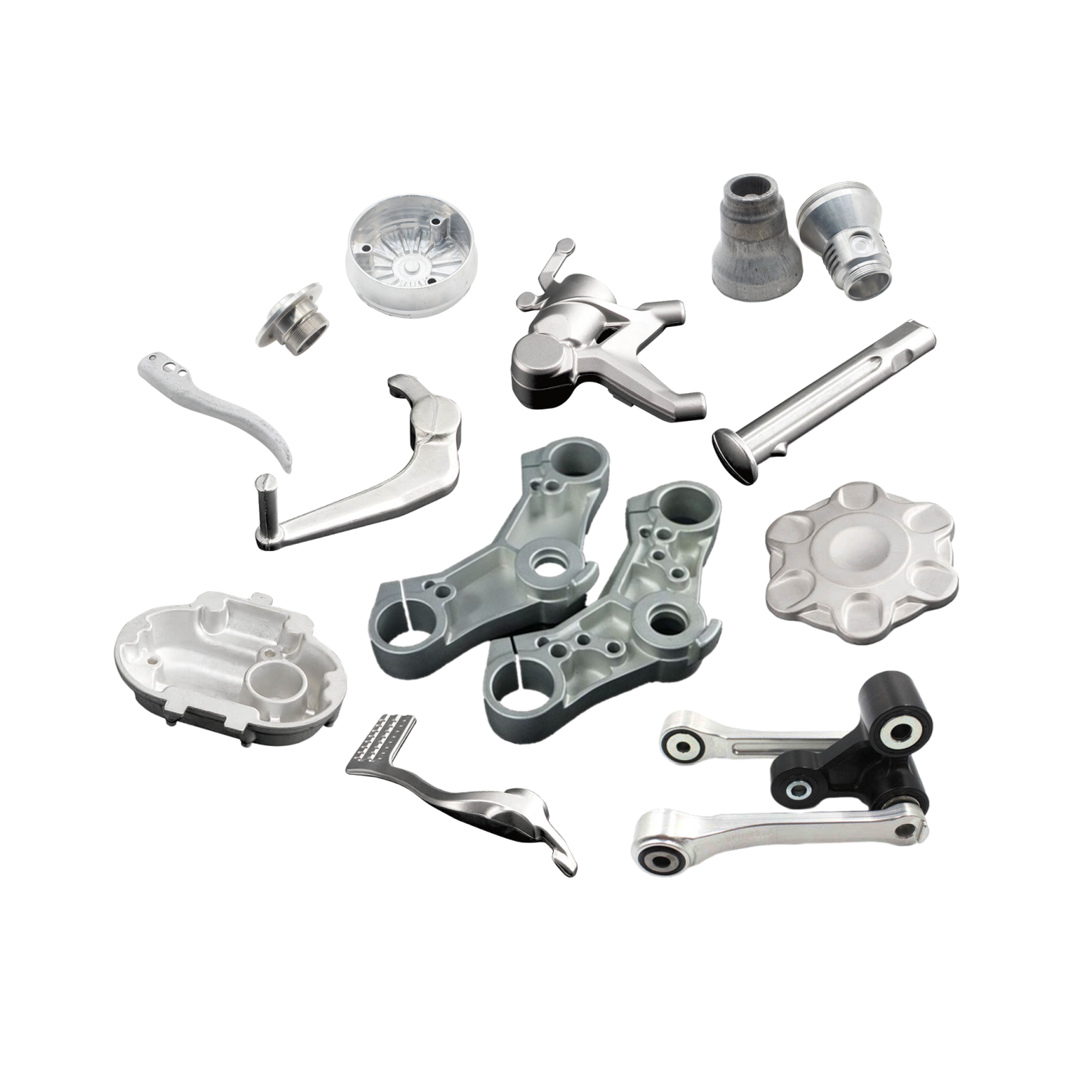
In modern industrial production, forged parts are widely used across various fields due to their high strength, wear resistance, and excellent performance. However, the surface properties of forged parts play an equally critical role in their practical applications. Forged parts are often exposed to harsh environments, such as high temperatures, humidity, chemical corrosion, and continuous mechanical stress, making proper surface treatment essential. Surface treatment not only enhances the corrosion resistance and wear resistance of forged parts but also improves their fatigue strength, extends their service life, and, in some cases, adds an aesthetically pleasing finish. Selecting the right surface treatment method is, therefore, key to ensuring the performance and reliability of forged components.
Comparison of Surface Treatment Methods
Below is a comparison of some common surface treatment methods for forged parts, detailing their advantages, disadvantages, and suitable applications:
| Surface Treatment Method | Advantages | Disadvantages | Suitable Applications |
|---|---|---|---|
| Sandblasting | Removes oxide scale and impurities, improves surface appearance, provides adhesion for coatings | Does not offer long-term corrosion protection, may slightly wear the surface | Pre-treatment for coating, painting, or heat treatment |
| Pickling | Removes rust and oxide scale, restores metallic luster | Acidic solutions can be harmful to the environment, prolonged treatment may cause material corrosion | Cleaning and pre-treatment for steel and stainless steel |
| Electroplating | Excellent corrosion resistance, smooth and aesthetic appearance, adds wear resistance | High cost, coating thickness is limited by process control | Automotive parts, tools, decorative components |
| Phosphating | Enhances paint adhesion, provides short-term corrosion protection | Weak corrosion resistance, rough surface requires further coating | Automotive and industrial parts before painting |
| Anodizing | Improves aluminum corrosion and wear resistance, allows dyeing for decorative finishes | Only applicable to aluminum and its alloys, complex and costly process | Aerospace, automotive aluminum components |
| Heat Treatment (Surface Hardening) | Increases surface hardness, enhances wear resistance and fatigue strength | Complex process, high cost, suitable for specific materials | High-stress components like gears and shafts |
| Powder Coating | Excellent corrosion resistance, available in various colors, highly durable | Requires specialized equipment, thick coating may affect precision | Automotive, construction, consumer goods |
| Black Oxide Treatment | Provides mild corrosion protection, creates an attractive black finish | Limited corrosion resistance, unsuitable for long-term exposure | Tools, fasteners, mechanical parts |
| Painting | Cost-effective, wide range of colors available | Low durability, prone to scratches or peeling | Machinery, automotive parts, structural components |
| Galvanizing (Hot-Dip/Electro) | Excellent rust resistance, low cost, suitable for mass production | Limited aesthetic options, hot-dip galvanizing may result in rough surfaces | Construction equipment, bolts, outdoor structures |
Conclusion
Surface treatment is a crucial step in improving the performance and durability of forged parts, playing a vital role in their practical applications. Whether it’s electroplating or galvanizing for long-term corrosion protection or heat treatment for enhanced surface hardness and fatigue strength, each method has its unique advantages and specific applications. Choosing the right surface treatment method not only ensures the reliability of forged parts in harsh environments but also significantly extends their service life.
In the future, with the advancement of industrial technologies and the growing need for eco-friendly solutions, surface treatment methods are expected to become more efficient, sustainable, and innovative. If you have any questions or insights about surface treatment for forged parts, feel free to share your thoughts in the comments section!