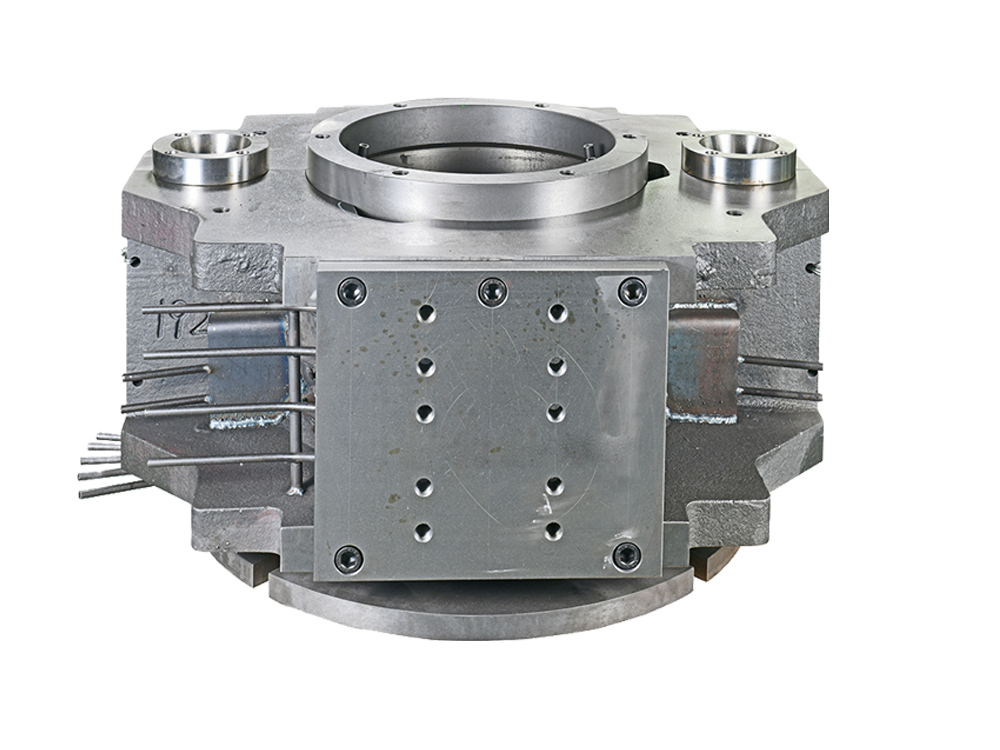
Forging dies are at the heart of the forging process, shaping metal into precise components under high pressure and heat. The design of these dies plays a critical role in determining the quality, efficiency, and cost-effectiveness of production. Whether it’s for the automotive, aerospace, or energy industries, the success of forging operations heavily relies on the quality of the die design.
In this blog, we will explore the key principles, steps, and modern technologies involved in forging die design, as well as its future trends in manufacturing.
What Are Forging Dies?
Forging dies are tools used to shape metal under high pressure and heat during the forging process. They directly mold the raw material into the desired shape. Depending on the application and production method, forging dies are categorized into the following types:
-
Open Die Forging Dies
These dies lack a closed cavity, allowing the material to deform freely between the dies. They are ideal for creating large, irregularly shaped components. -
Closed Die Forging Dies
These dies feature a fully enclosed cavity, forcing the material to fill the mold under high pressure. This type is suitable for producing high-precision, high-volume parts. -
Precision Forging Dies
Designed for intricate and small components, these dies are commonly used in manufacturing parts such as turbine blades for jet engines and automotive gears.
Key Principles of Forging Die Design
A well-designed forging die ensures high efficiency and consistent quality. The following principles guide the design process:
-
Optimized Structure
The die should facilitate smooth material flow and easy removal of the forged part. Proper parting lines and cavity shapes reduce the risk of defects, such as cracks or voids. -
Maximized Material Efficiency
The design should minimize material waste by optimizing metal flow paths and reducing excess flash or scrap. -
Performance-Oriented Design
The die must ensure that the forged part meets the required dimensional accuracy, surface finish, and mechanical properties. -
Extended Die Life
By selecting durable, heat- and wear-resistant materials and reducing stress concentrations, the die design can enhance longevity under extreme forging conditions. -
Cost-Effectiveness
The die should balance manufacturing and maintenance costs, ensuring it can be produced and maintained economically while meeting production demands.
Steps in Forging Die Design
Die design is a complex process that involves multiple stages:
-
Analyzing Workpiece Requirements
Examine the shape, size, material, and performance needs of the part to determine the appropriate forging approach. -
Choosing the Forging Method
Select the most suitable forging technique (open die, closed die, or precision forging) based on the complexity and production volume of the part. -
Selecting Die Materials
Choose materials for the die that can withstand high temperatures, pressure, and wear, such as tool steel or alloy steel. -
Die Structure Design
Design the cavity shape, parting line, gating system, and venting features to ensure smooth material flow and complete die filling. -
Simulation and Optimization
Use Computer-Aided Design (CAD) and Computer-Aided Engineering (CAE) tools to simulate material flow, temperature distribution, and stress concentration, optimizing the design to avoid defects. -
Die Manufacturing and Testing
Manufacture the die based on the finalized design and perform trials to validate its performance under actual production conditions.
Key Factors Impacting Die Design
Several factors influence the effectiveness of a die design:
-
Material Properties
The flowability, melting point, and deformation resistance of the metal being forged directly impact the die’s design requirements. For example, high-strength alloys require dies with superior heat resistance. -
Shape Complexity
The more intricate the component, the more precise and detailed the die design needs to be. -
Forging Temperature and Pressure
The die must withstand the extreme heat and pressure of the forging process, requiring careful optimization of stress distribution and thermal expansion. -
Production Volume
High-volume production demands durable dies and efficient cooling systems to enhance productivity.
Modern Technologies in Die Design
Modern technologies have revolutionized forging die design, making it more efficient, precise, and innovative:
-
CAD/CAE Tools
CAD software aids in creating detailed die designs, while CAE tools simulate metal flow, thermal behavior, and stress distribution to optimize performance. -
3D Printing
Additive manufacturing enables rapid prototyping of die designs, allowing for quick testing and validation before full-scale production. -
Smart Monitoring Systems
Sensors embedded in forging equipment can monitor die temperature, pressure, and wear in real-time, predicting maintenance needs and preventing failures. -
Advanced Materials
New materials, such as ceramic-based composites, improve die durability, heat resistance, and performance in extreme forging environments.
Future Trends in Forging Die Design
As industries demand greater efficiency, precision, and sustainability, forging die design is evolving in the following directions:
-
Intelligent and Automated Design
Artificial Intelligence (AI) and automation are being integrated into die design processes, enabling faster, more accurate, and adaptive designs. -
Sustainable Manufacturing
Optimized designs reduce material waste and energy consumption, aligning with green manufacturing practices. -
Customization and Multi-Functionality
Industry-specific dies are being developed to meet unique requirements, while multifunctional dies combine several processes to improve efficiency.
Conclusion
Forging die design is a cornerstone of the manufacturing process, shaping the quality and efficiency of forged components. By adopting modern technologies and adhering to sound design principles, industries can achieve higher precision, reduced costs, and extended die life.
As the demand for smarter and more sustainable manufacturing grows, the future of forging die design will continue to evolve, unlocking new possibilities for innovation. If you have any questions or insights about forging die design, feel free to share them in the comments below!